Category: Uncategorized

  • How Sponsors Can Capitalize on Athlete Marketing in the Wake of March Madness

    In light of the NCAA’s changes of NIL legislation, much of the focus has been on student-athletes. However, companies have been presented with major sponsorship and branding opportunities as well. This is an outline of how brands can capitalize on the marketability of student-athletes in the wake of the March Madness tournaments.

    The numbers behind March Madness

    March Madness is one of the key events on the sports calendar. During the tournament, the eyes of the sports world are on the men’s and women’s NCAA basketball tournaments. In 2023, the NCAA Men’s basketball championship final averaged 14.7 million viewers for the matchup between San Diego State and UCONN. The NCAA Women’s basketball championship averaged a record 9.9 million viewers for the final game between Iowa and LSU. This exposure provides a great opportunity for brands to take advantage of the tremendous publicity that the student-athletes competing have. As an example, LSU star Angel Reese’s Instagram following doubled after the Final Four and championship games, with her Instagram and Tik Tok followings reaching more than a million each.

    https://www.instagram.com/p/CqjbSwjv8ju/?utm_source=ig_web_copy_link

    How brands can capitalize

    Because of the student-athletes’ increased exposure during the March Madness tournaments, companies can strategically utilize athlete marketing to promote their businesses by announcing new product lines, facilitating customer interaction and acquisition, or simply increasing brand awareness. Athletes can use social media sites like Facebook, Twitter, Instagram, and TikTok to share high-engagement branded content on behalf of brands that sponsor them.

    NIL deals and athlete marketing are not limited to large, national brands. Smaller companies can work with student-athletes from various schools, in various sports, with different levels of national exposure and social media followings. While March Madness champions and “Cinderellas” have tremendous notoriety in the months after the tournaments, student-athletes across the board see an increase in social media activity. Moreover, smaller companies—especially those located in college towns—can host in-person sponsorship activation events, in addition to utilizing social media. In-person activations can help drive customers to interact with products or services and can create extremely high ROI for sponsors.

    Licensing implications

    Importantly, however, companies cannot use the March Madness, NCAA, or school logos without acquiring appropriate licenses for those marks, which can be prohibitively expensive for many businesses. Companies looking to partner with student-athletes should ensure that they have all necessary intellectual property licenses before engaging in any paid promotions. Of course, businesses can work with athletes without acquiring IP licenses from the NCAA or its member institutions. They should then be considerate of what content can and cannot be used for purposes of sponsorship activity. NIL contracts should also include the relevant IP licenses and publicity rights from the student-athlete.

    Companies interested in pursuing NIL deals should consult with experienced counsel as NIL deals with college athletes must comply with state and federal law, institutional policies, and NCAA regulations.

  • The NCAA’s new Standard of Review for NIL Violations: How it Works and What it Means 

    NEW NCAA Bylaw 19.7.3: “In cases involving name, image and likeness offers, agreements and/or activities in which related communications and conduct are subject to NCAA regulation, the infractions process shall presume a violation occurred if circumstantial information suggests that one or more parties engaged in impermissible conduct. The enforcement staff may make a formal allegation based on the presumption. The hearing panel shall conclude a violation occurred unless the institution or involved individual clearly demonstrates with credible and sufficient information that all communications and conduct surrounding the name, image and likeness activity complied with NCAA legislation.” 

    Why did the NCAA change the standard of review and how does it work?

    In October of 2022, the NCAA introduced and passed a new standard of review for investigating and alleging rules violations relating to NIL. The legislation went into effect on January 1, 2023, and only governs conduct subsequent to that date. The new rule allows the NCAA Committee on Infractions (COI) to presume a violation took place if there is enough circumstantial evidence to validate the presumption. This change was made due to the difficulty the NCAA’s enforcement staff was having with thoroughly investigating alleged violations of NIL rules. 

    According to Jon Duncan, the NCAA VP of Enforcement, the NCAA was struggling to collect sufficient evidence to prove violations without the participation and cooperation of boosters and other parties to NIL arrangements. Notably, the NCAA does not have subpoena power and cannot require anyone to speak with them or appear on the record during an investigation. This led to a lack of evidence to allege violations, even though public news reports made it appear that violations had occurred.

    Previously, the NCAA enforcement staff could only rely on evidence in the record (evidence collected through their investigation) and had the burden of proving a violation occurred. Now, the NCAA enforcement staff can rely on news reports, other member institutions, and information from sources, amongst other previously inadmissible evidence, to allege a violation. A member institution must then “clearly demonstrate with credible and sufficient evidence” that a violation did not take place for the COI to find that a violation did not occur. Otherwise, the COI will find that violations did occur. 

    The process 

    If the NCAA enforcement staff suspects a violation of NIL policy, it will send a member institution a Letter of Inquiry (LOI) and then conduct an investigation. During the investigation, the enforcement staff will conduct interviews and request documents concerning the alleged violation. If the enforcement staff’s investigation shows that the violations presumptively occurred, the enforcement staff will send a Notice of Allegation (NOA) to the institution and any coaches or staff that may have been involved, identifying the information that they believe supports the violation. The member institution would then be responsible for proving that the violation did not occur before the COI. 

    What is considered a violation under NCAA NIL bylaws? 

    Impermissible contacts

    • An institution’s representatives may not directly or indirectly contact an athlete to discuss NIL deals if they are in the NCAA Transfer Portal
    • Anyone representing the athletics interests of a member institution, including collectives and boosters, are prohibited from engaging in NIL-related recruiting activity

    Impermissible inducements

    • A staff member from a member institution may not offer, guarantee, or discuss an NIL opportunity to an athlete, their family, or representative during the recruiting process
    • Anyone representing the athletics interest of a member institution (collective, booster, etc.) may not enter or announce (verbally or in writing) an NIL agreement with a recruit before they are enrolled at the institution
    • A NIL collective and/or its representatives may not engage in recruiting activities and/or the promotion of a specific recruit before that recruit is committed to the institution 
    • NIL agreements may not require a recruit to be “in the area of” the institution before enrollment in order to complete the terms of the agreement (e.g. local appearances)

    Impermissible benefits 

    • Institutional staff members, boosters, or other representatives of the institution may not solicit, facilitate, and/or provide NIL opportunities in exchange for a student athlete to stay enrolled at the institution

    What does this mean for me? 

    For athletes

    Once an athlete has committed to the institution, they may discuss NIL deals with any collectives or booster of that institution. To avoid any NCAA violations, athletes should wait until they are enrolled in an institution before discussing NIL opportunities with the institution. Once the athlete is enrolled at the institution, they may work with the institution to find NIL opportunities, including connecting with boosters and alumni. However, the institution and/or anybody associated with the athletics interests of the institution may not use NIL opportunities to convince an athlete to commit to or stay enrolled at the school. An athlete cannot be required to be “in the area of” the school before their enrollment for the purpose of fulfilling the terms of their NIL contract.

    For institutions

    Member institutions should not discuss specific NIL opportunities with recruits, their family, or representatives during the recruiting process until the athlete is enrolled at the member institution. Otherwise, institutions can discuss NIL opportunities that have generally been available to current athletes. If a prospect is entering the NCAA Transfer Portal, the member institution should wait until the prospect does so before contacting the prospect about NIL opportunities. Member institutions may not solicit, facilitate, or provide additional NIL opportunities to convince an athlete to enroll or stay enrolled at a member institution. 

    Third party representatives (Boosters and Collectives) 

    Boosters and Collectives and other representatives of an institution’s athletic interests (but not anybody that is a staff member of the institution itself) may start contacting athletes regarding NIL opportunities once the athlete signs with the institution. Before the athlete is signed, third party representatives may not contact the athlete or their family about NIL opportunities conditional on enrolling at a particular university. Third Party Representatives may not solicit, facilitate, or provide additional NIL opportunities to convince an athlete to enroll or stay enrolled at a member institution.

    Athletes, institutions, boosters, and collectives should consider working with experienced counsel to ensure compliance with all NIL rules and bylaws.

  • NCAA Announces First NIL-Related Infractions Case

    NCAA Announces First NIL-Related Infractions Case

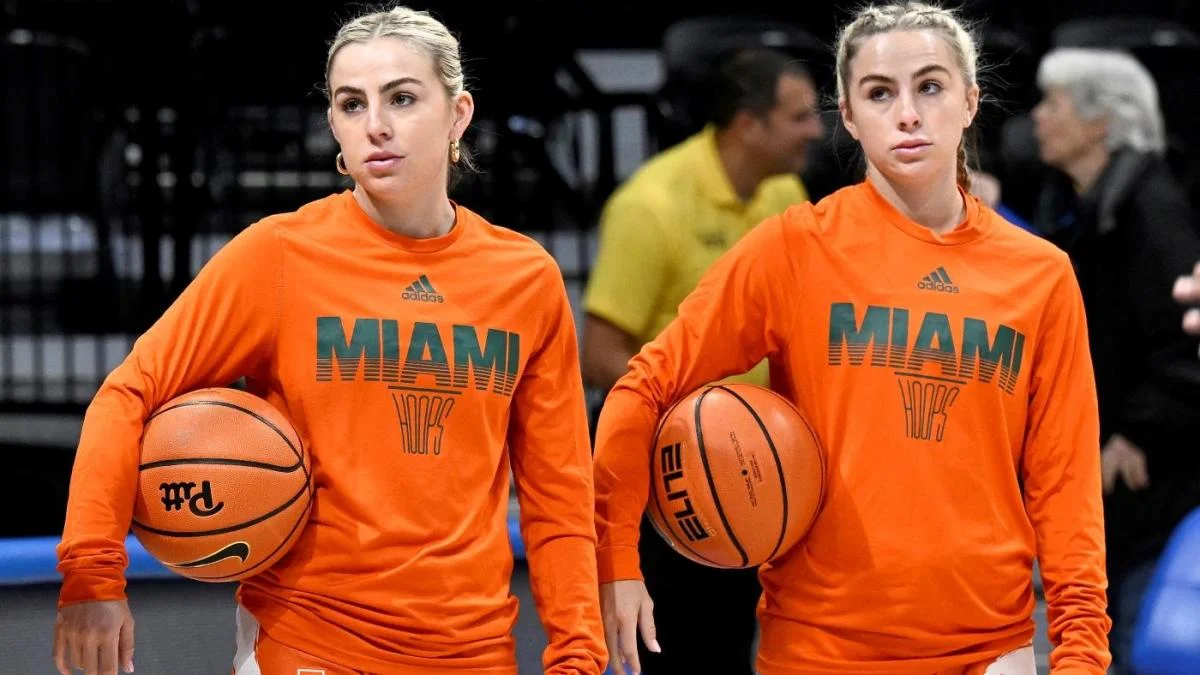
    On February 24, 2023, the NCAA released a decision in its first NIL-related infractions case. The case dealt with impermissible recruiting contacts and inducements in the University of Miami’s Women’s basketball program. Although the case did not involve any direct violation of any of the NCAA’s NIL rules or policies, it did involve John Ruiz, a University of Miami booster who has posted extensively on social media about his NIL deals with student-athletes at the school. The Cavinder twins—who were in the transfer portal at the time—had a dinner at Ruiz’s house prior to committing to the school. Miami’s coaching staff had a role in connecting the Cavinder twins to Ruiz.

    Procedural posture

    Following an investigation by the NCAA’s enforcement staff, the case was submitted to the NCAA Division I Committee on Infractions (COI) through the Association’s Negotiated Resolution process. The Negotiated Resolution process is implemented when all parties (here, the NCAA enforcement staff, the University of Miami, and the head women’s basketball coach) agree on the facts, violations, and appropriate penalties. The process does not move forward to a contested hearing before the COI and has no precedential value. A Negotiated Resolution is akin to a plea bargain in criminal law, where the defendant admits wrongdoing and foregoes a contested trial, typically in exchange for a lesser penalty.

    The recruiting rules in question

    The parties agreed that the coaching staff’s facilitation of a meeting between the Cavinder twins and Ruiz violated NCAA recruiting rules. Importantly, the recruitment of prospective high school and transfer student-athletes is still limited to coaches and athletics staff. Although it may seem that boosters and NIL collectives have become big players in the recruiting market, recruitment should only be something that coaches and athletics staff engage in. Coaches cannot connect prospects to boosters or collectives to discuss specific NIL opportunities before they commit. Otherwise, coaches can only point to the deals that current or former student-athletes signed during their time at the school.

    Penalties for the violations

    Although the parties agreed that recruiting violations occurred, the penalties for the violations are fairly limited. The Miami head women’s basketball coach was suspended for three games, while the university was placed on probation for one year, fined $5,000 plus 1% of the women’s basketball budget, and received relatively minor recruiting restrictions. However, Miami’s one-year probation could be impactful if the university finds itself in front of the COI again in the near future. The NCAA did not penalize the Cavinder twins, although the process for ineligible student-athlete reinstatement occurs separately from the infractions process.

    Moreover, the NCAA did not require that the university “disassociate” from Ruiz, which is frequently a penalty that the COI prescribes when a booster is involved with an infractions case. Importantly, the COI added some language of its own to the infractions decision. Typically, a Negotiated Resolution includes language from the enforcement staff and the university, and the COI simply approves the agreement without adding much of their own input. Here, however, the COI took the opportunity to emphasize that it will be quick to utilize the disassociation penalty for boosters who engage in impermissible NIL activity in the future.

    Key takeaways

    For businesses, boosters, and collectives that are looking to work with student-athletes on NIL deals, it is paramount to ensure that all contact with the student-athlete and the details of the agreement are compliant with any relevant NIL laws, rules, or policies. Working with experienced counsel can help ensure the student-athlete’s continued eligibility and help their current or prospective university continue to comply with all applicable rules and laws.

  • Making the Case for Subscription-Based Legal Services

    As we are nearly ¼ of the way through the 21st century, it is beneficial to examine how consumer preferences and business services have developed in recent years. Subscription-based offerings have permeated through dozens of industries over the past decade. From Peloton and Equinox Plus to Netflix and Apple Music, businesses have started to offer consumers the ability to purchase products and services in a different way than was previously available. And subscription-based product offerings aren’t just beneficial to venture capitalists and Wall Street. Oftentimes, they are beneficial to consumers as well. Business services—particularly legal services—have been slower to modernize than consumer services.

    How subscription-based benefits consumers

    Of course, the subscription-based model benefits companies like Netflix and Apple with more consistent cashflow. But it also provides an enhanced consumer experience. Compared with decades past, consumers of on-demand entertainment have access to more options and are able to consume more of it. As opposed to spending 99 cents per song on iTunes, consumers can now listen to as many songs as they would like. As opposed to spending $3.99 to rent a movie, consumers can now watch unlimited movies.

    Where legal services are inefficient

    While music listeners can now pay $10 per month instead of 99 cents per song, consumers of corporate legal services are still paying for legal counsel in 6-minute increments—about the equivalent of listening to one or two new songs. While the 6-minute billing certainly works for law firms, it is about as inefficient as paying 99 cents per song. For music listeners, the choice was either to spend lots of money or listen to less music. For consumers of legal services, the choice is still either to spend lots of money or receive less dedicated time and attention from their attorneys.

    With large, publicly traded companies, the answer is usually to just spend tens or hundreds of thousands of dollars in legal fees. But for most small and midsize businesses, they wind up consuming less legal counsel because of budget constraints. That is, of course, until it is too late (think, defending a lawsuit). But what if consumers of corporate legal services didn’t have to compromise on quality or quantity just because of price? Like today’s music listeners, they could consume as much as they want or need. The result? An enhanced consumer experience.

    How subscription-based legal services can help

    Instead of giving an attorney X number of hours to draft a contract based on budget limits, the attorney can take as much time as is necessary to draft the contract as well as possible. And as opposed to omitting certain legal services because of high cost, subscription-based legal consumers wouldn’t have to worry about whether or not it is “worth it” to consult with their attorney on a particular question or issue. Moreover, subscription-based legal consumers also benefit from certainty in cost—something every business owner would like. 

    In advising business clients as outside counsel, Frieser Legal offers subscription-based legal services. This approach helps us meet our clients’ needs by providing higher-quality—yet more cost-effective—counsel. Instead of continuing to pay for legal services in 6-minute increments, ditch the 99 cents per song model. You listen to as many songs as you would like. Why not get as much legal counsel as you need, too?

  • College Athletes as Employees: How the 3rd Circuit Could Pave the Way

    For as long as intercollegiate athletics have existed, colleges and universities (and the NCAA) have maintained that college athletes are “student-athletes.” Students first, athletes second. Even with the introduction of athletic scholarships—which provide a scholarship in exchange for athletic performance—college athletes have not been viewed by courts as employees. While there have been dozens of legal challenges to the employment status of “student-athletes,” courts have historically sided with the NCAA and its member schools.

    There are currently three major legal actions that are pending which could classify college athletes as employees of their schools, their conferences, and/or the NCAA. The first is an Unfair Labor Practice charge against USC, the Pac-12, and the NCAA. The charge claims that the parties have violated the National Labor Relations Act (NLRA). If successful in that case, the athletes would have the ability to form a union and collectively bargain with their employer (USC and potentially the Pac-12 and NCAA). The second is a related NLRB unionization effort, where a regional director has recognized Dartmouth men’s basketball players’ right to elect a union.

    The third is Johnson v. NCAA, a case that is currently ongoing and considers whether or not college athletes are employees for purposes of the Fair Labor Standards Act (FLSA). The analysis to determine whether or not an individual or group of individuals are “employees” differs between the FLSA and the NLRA. Thus, it is possible that the athletes could prevail in one case but not the other and be considered “employees” for purposes of the FLSA or the NLRA, but not both. In addition to the different tests to determine employment status, the NLRA and FLSA also grant different rights and abilities to employees.

    What is the Fair Labor Standards Act?

    The FLSA provides certain rights and protections to qualified employees. Most important amongst the protections are the rights to receive a minimum wage and overtime pay for any hours worked above 40 per week. The FLSA does not provide employees the right to unionize or collectively bargain with their employers like the NLRA does. Moreover, it does not entitle employees to a competitive or fair market rate for their employment. The main protections that are available to employees under the FLSA are simply a minimum wage and overtime pay.

    History of the Johnson case

    On March 15, 2023, the U.S. Court of Appeals for the Third Circuit heard oral arguments from the athletes and the NCAA on the issue. Previously in the case, the district court denied the NCAA’s motion to dismiss, which led to its appeal to the 3rd Circuit. At this point in the litigation, the court is deciding whether or not the athletes’ case is “plausible.” If their legal arguments were deemed plausible, the case would proceed. If not, the NCAA would win and the case would be dismissed.

    July 2024 Update

    On July 11, 2024, the 3rd Circuit delivered an opinion in the ongoing Johnson v. NCAA case, considering whether college athletes, by nature of their “amateur status,” are precluded from ever bringing an FLSA claim. The court determined that no, student athletes are not precluded, and provided a new test to determine whether these athletes could be employees under the FLSA.

    According to the court, a college athlete may be an employee under the FLSA when: “(a) they perform services for another party, (b) ‘necessarily and primarily for the [other party’s] benefit,’ (c) under that party’s control or right of control, and (d) in return for ‘express’ or ‘implied’ compensation or ‘in-kind benefits.’”

    As has been more and more common in recent years, the court shot down the NCAA’s attempted argument of amateurism, stating the frayed and dubious history of amateurism no longer holds water to the economic realities of college athletes. Further, the court highlighted the need for an economic realities framework that distinguishes college athletes who play their sports for recreational or noncommercial reasons from those whose play crosses the legal line into work protected by the FLSA. However, the court does note that it is less confident that that students who receive athletic scholarships to participate in revenue generating sports such as men’s basketball and football would be able to make such a claim, but for the purposes of this case it need not be addressed.

    Next Steps

    The case has been remanded to the district court for further proceedings in compliance with the 3rd Circuit’s opinion. The parties will now conduct discovery to establish the facts, and if there is no material disagreement on the facts, the parties would each likely move for summary judgment. At that point, the district court would decide whether or not the athletes are employees as a matter of law. But the second time around, the question wouldn’t be through the lens of plausibility. Otherwise, the case would be decided on the merits.

    Regardless of whether or not the district court finds that the athletes are employees, the case would most likely be appealed to the 3rd Circuit to decide again, with a different standard of review. Notably, if the appellate court finds that the athletes are in fact employees, a circuit split would occur. The 7th and 9th Circuits decided the same issue, in 2016 and 2019 respectively, and both courts found that the athletes were not employees for purposes of the FLSA.

    Potential Further Appeals

    If the circuit courts have different outcomes on the issue, there is a strong possibility that the Supreme Court would then decide to take the case for further review and resolution of the split decisions. Generally, the Supreme Court will resolve disagreements between the lower courts to promote uniformity of the law. If the 3rd Circuit eventually decides that the athletes are not employees, it is much less likely that the Supreme Court would decide to take the case.

    Importantly, much has changed in college athletics since the 7th and 9th Circuit courts decided that college athletes were not employees for purposes of the FLSA. The most important development is that college athletes are now able to receive compensation for use of their name, image, and likeness, and some college athletes have even made millions in NIL deals. Paired with the NCAA’s since-modernized transfer portal rules, college athletes are a far cry from the “amateurs” they were perhaps once-thought to be. It is possible—and perhaps even likely—that the courts deciding this case will give weight to the fact that college athletes can now earn millions of dollars in compensation.

    What would happen if the athletes ultimately win?

    If the athletes are ultimately successful, they would be statutory employees of their universities (and/or their conferences and the NCAA) for purposes of the FLSA and would be entitled to earn the minimum wage plus overtime pay. The deciding courts would have to determine the appropriate scope of the ruling. It is possible that employment status could be limited to only college athletes playing at a certain level or in certain sports. For example, the decision could be limited to only Division I athletes or only FBS football and men’s and women’s basketball players. Universities would likely need to change the structure of their athletic departments to comply, while also complying with Title IX and antitrust law. Moreover, the Unfair Labor Practice charges currently pending may or may not be resolved before the Johnson case.

  • Frieser Legal Joins the NIL Verified Network

    NEWS RELEASE

    FOR IMMEDIATE RELEASE

    Frieser Legal

    February 16, 2023

    Frieser Legal Joins the NIL Verified Network

    The membership program represents a critical step forward in creating a more equitable and trustworthy NIL landscape for college athletes

    MILWAUKEE, FEBRUARY 16, 2023. Frieser Legal, a pioneering law firm in the NIL space, announced today that they are one of the inaugural members of the NIL Verified Network.

    The NIL Verified Network, established by NIL Network, is a membership program made up of service providers dedicated to ensuring transparency, honesty, and fairness within the emerging NIL industry. The initial businesses were chosen due to their consistent display of athlete-focused business practices.

    As college athletes navigate the NIL landscape, it has become increasingly important for them to be able to differentiate between trustworthy service providers and those that seek to exploit the lack of regulation in the field.

    Michelle Meyer, founder of NIL Network and former NIL Coordinator at San Diego State University, started building the NIL Verified Network program in May of 2022 after witnessing firsthand the frustrating reality that’s happening on the ground floor, well outside any NIL headlines.

    “Bad actors are thriving in the wild west landscape right now,” Meyer explained. “Social media allows these opportunists to directly access the athletes, where they exaggerate their credentials, over promise their services, and will say pretty much anything to gain the athlete’s trust. Then, they pressure these young adults to sign horribly one-sided contracts, knowing that most college athletes don’t have the support to fully understand what they’re agreeing to. I’ve seen it too many times already. Enough is enough.”

    NIL Network is striving to eliminate these bad actors by bringing together the athlete-centered NIL businesses, supporting their efforts, and amplifying their brands.

    Meyer continued, “Frieser Legal was a clear choice when I was extending the first invitations to join the NIL Verified Network. Josh has built an innovative practice and thoroughly understands collegiate athletics and the NIL landscape. He is always selflessly contributing to the betterment of this new industry by sharing insights for all NIL stakeholders and I’m excited to continue working with him!”

    To join the network, businesses must become NIL Verified™, the first NIL service provider standard in the industry. Developed with the expertise of former Power 5 compliance director and current Freeman┃Lovell partner Patrick Stubblefield, NIL Verified™ aggregates and vets information about a business’ registration, employees, business practices, and compliance with NIL laws, NCAA interim policies, and institutional policies. Additionally, it includes a review of the company’s terms to ensure they include all of the expected clauses and fair language for college athletes.

    “The NIL Verified Network is crucial to the betterment of the NIL industry,” shared Josh Frieser, Principal Attorney of Frieser Legal. “I am proud to be able to work with NIL Network and the other NIL Verified Network members to provide more clarity and trust to college athletes. Michelle Meyer and I share the goal of a marketplace where college athletes can connect with trustworthy companies and service providers for their extensive NIL needs.”

    NIL Verified™ and the resulting network provide a crucial layer of protection for college athletes, making it easier for them to navigate the complex world of NIL partnerships. The network also offers peace of mind to administrators, who can now differentiate between businesses in a crowded market and feel confident in their choices and recommendations, knowing that NIL Verified businesses have been vetted by a third-party.

    LEARN ABOUT THE NIL VERIFIED NETWORK

    ABOUT FRIESER LEGAL

    Frieser Legal is a pioneering law firm that is the first of its kind. We are a full-service law firm, dedicated to meeting the needs of athletes, agents, entrepreneurs, sports industry start-ups, and small businesses. We strive to understand the unique and complex legal challenges that our clients face and assist them in navigating the dynamic sports marketplace.

    Frieser Legal Principal Attorney Joshua M. Frieser has broad experience representing college athletes for NCAA regulatory proceedings, NIL contracts, and agency contracts. He also advises athletes on trademarks and intellectual property, business entity formation, tax law, and hosting camps and giving lessons. Additionally, Josh serves as outside general counsel to multiple entrepreneurs and sports industry start-ups.

    ABOUT NIL NETWORK

    NIL Network was founded in 2020 as a free resource to help athletes, coaches, and administrators understand the NIL changes that were coming the following summer.

    Today, NIL Network is a platform that equips athletes, administrators, and other early adopters with industry leading databases, objective resources, and trustworthy connections so they can succeed in the nascent name, image, and likeness era of collegiate sports.

    Media Contact:

    Joshua Frieser

    Principal Attorney, Frieser Legal

    josh@frieserlegal.com

    frieserlegal.com

Privacy Policy Privacy Policy